TL;DR
- Insurance agency automation works best when it fixes a visible handoff.
- Start with submission intake, missing documents, quote follow-up, and renewal or lead follow-up.
- Do not replace the AMS first. Add a follow-through layer around the places work gets stuck.
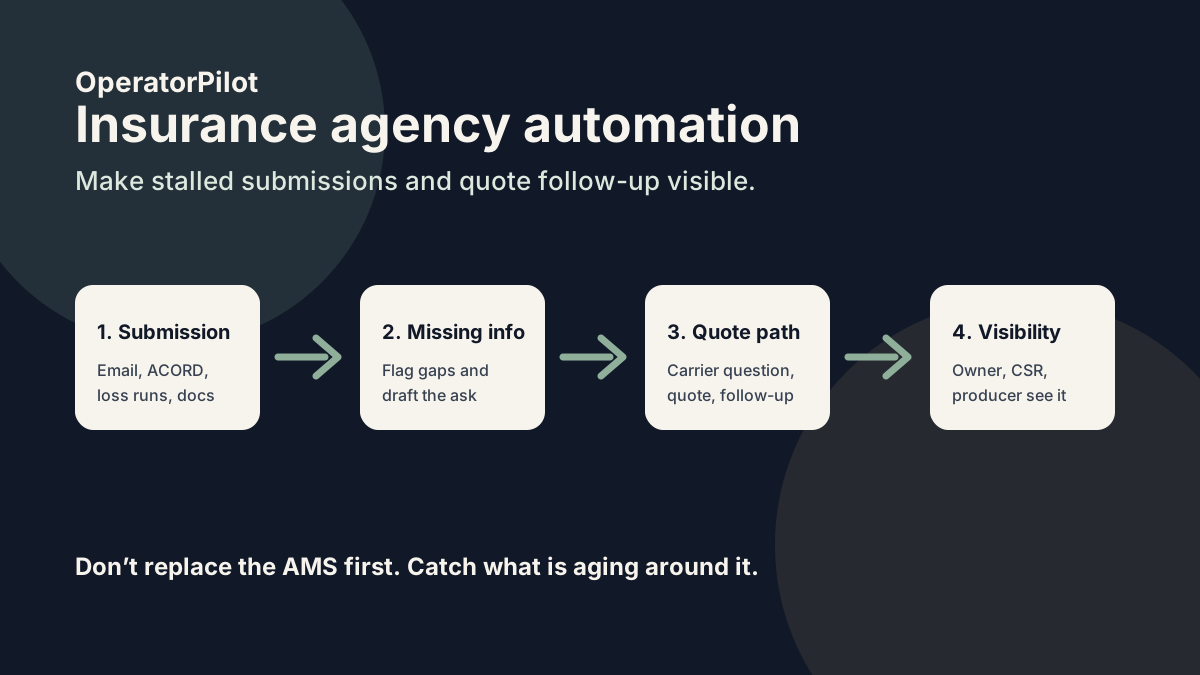
Insurance agency automation uses software, AI, and workflow rules to reduce manual work inside an agency. The best starting point is not replacing the AMS. It is catching the handoffs where submissions, missing documents, quote follow-up, and client replies slow down.
Most agencies do not need a bigger automation project first.
They need to know what is aging between steps.
A commercial submission comes in. Someone needs loss runs. A carrier asks a follow-up question. A quote goes out. A producer assumes the CSR has it. The CSR assumes the producer has it.
Then the account stalls.
That is the work to inspect first.
Want to see where commercial opportunities stall? Start with the free guide: 7 Places Commercial Quotes Stall Before Anyone Notices.
What is insurance agency automation?
Insurance agency automation is the use of software, rules, reminders, and AI to move agency work from one step to the next with less manual chasing. It can help with lead follow-up, renewal tasks, document requests, submission intake, quote follow-up, policy servicing, and client communication.
The word “automation” can sound bigger than it needs to be.
In practice, it usually means this:
A task comes in. The system names what it is. The right person gets the right next step. The work does not sit unseen.
That is it.
For commercial insurance agencies, the highest-value automation is often not flashy. It is the quiet stuff: missing documents, stale submissions, quote follow-up, and carrier/client questions that need a clear owner.
Where should an insurance agency automate first?
An insurance agency should automate the workflow where delay creates the most drag. For many commercial agencies, that means submission intake and quote follow-up before anything else.
AgencyBloc gives examples like lead follow-up workflows and renewal workflows. Insly describes submission automation as a system that reads submissions, maps data, follows up on gaps, and pushes completed records forward.
That “follows up on gaps” part matters.
The gap is where money hides.
Start here:
- New commercial submissions
- Missing ACORDs, loss runs, schedules, or supporting documents
- Carrier questions that need a fast reply
- Quotes sent with no next action
- Renewal workflows with unclear ownership
- New lead forms that need a same-day response
Do not start with the workflow that looks coolest in a demo.
Start with the workflow your team already complains about.
Insurance agency workflow leaks and what to automate first
| Workflow leak | What it looks like | Risk | First automation to add |
|---|---|---|---|
| New commercial submission | Producer forwards a messy email with attachments. | Intake slows down before the account is even reviewed. | AI summary, missing-doc flag, and owner assignment. |
| Missing loss runs, ACORDs, or docs | Staff manually chase the same missing items. | Account managers waste time and submissions sit half-ready. | Auto-generated missing-info checklist and broker/client draft reply. |
| Carrier question arrives | A carrier asks for detail and the request gets buried. | The quote path pauses while everyone assumes someone else replied. | Carrier-question alert with a next-action owner. |
| Quote sent but not followed up | A quote is emailed and no one knows the next touch. | Winnable accounts go quiet. | Quote follow-up task, draft email, and status flag. |
| Renewal date approaching | Renewal work lives in the AMS, email, and people’s heads. | Last-minute rushes create errors and client stress. | Renewal countdown with stuck-item visibility. |
| Lead form submitted | A prospect asks for help and waits. | The prospect talks to another agency. | Same-day response, routing, and producer notification. |
This is why I do not like starting with “AI for the whole agency.”
Too mushy.
Pick one leak. Prove the fix. Then build the next one.
Why do commercial insurance submissions stall?
Commercial insurance submissions stall because the work moves across people, documents, carriers, and inboxes. Every handoff creates a chance for the next step to become unclear.
The team may care a lot.
That is not the issue.
The problem is visibility. A submission can be technically “in progress” while nobody has a clean view of what is missing, who owns the next step, or how long the account has been waiting.
A simple automation layer can help by asking 4 questions:
- What came in?
- What is missing?
- Who owns the next step?
- How long has this been waiting?
That beats another dashboard nobody checks.
How does automation help with missing documents?
Automation helps with missing documents by turning messy intake into a clear checklist. The system can read the request, identify common missing items, draft the follow-up, and flag the account before it sits too long.
For commercial lines, that may include:
- ACORD forms
- loss runs
- driver lists
- vehicle schedules
- payroll details
- class codes
- prior coverage
- signed supplemental forms
The exact list depends on the account.
But the workflow is usually the same: spot the missing item, tell the right person, draft the clean ask, and track whether it came back.
That is a good job for AI-assisted automation.
What is the role of AI in insurance agency automation?
AI can help an insurance agency read messy inputs and prepare the next step. It can summarize emails, pull details from documents, draft replies, classify urgency, flag missing information, and help staff see what needs attention.
AI should not make coverage decisions by itself.
Hard stop.
Insurance language is too specific, and the risk of saying the wrong thing is real. A Reddit discussion about agency automation made the same point: client communication is harder than simple CRM updates because insurance terms and emotionally charged conversations require care.
So the safer first move is human-reviewed automation.
Let AI draft. Let AI flag. Let AI summarize. Let AI remind.
Keep a licensed or responsible human in control of what goes out.
Should automation replace your AMS?
Insurance agency automation should not replace your AMS first. Your agency management system is the system of record. Automation should work around it, fill the gaps, and make stuck work easier to see.
That means the automation layer may touch:
- forms
- shared inboxes
- spreadsheets
- task tools
- CRM fields
- AMS notes or exports
- call summaries
- document folders
The AMS still matters.
But the AMS does not always catch the moment when a producer, CSR, account manager, carrier, or insured is waiting on the next person.
That is where a follow-through layer helps.
What workflows should agencies avoid automating too early?
Agencies should avoid automating high-risk judgment work too early. Coverage advice, binding decisions, complex client communication, and anything that could create E&O exposure should stay human-led until the process is tested and controlled.
Start with lower-risk support work:
- intake summaries
- missing-item detection
- internal alerts
- draft follow-ups
- quote aging visibility
- renewal countdowns
- task reminders
That work still has value.
It also teaches the agency where AI fits without handing the keys to a system nobody trusts yet.
How much does insurance agency automation cost?
Insurance agency automation can cost a few hundred dollars for basic templates or several thousand dollars for a custom workflow that touches intake, documents, follow-up, reporting, and staff review. The price depends on the workflow, tools, risk level, and how much human review is needed.
A simple lead follow-up workflow is smaller.
A commercial submission intake workflow is bigger.
A full agency-wide automation program is a different project entirely.
For most agencies, the smartest first step is an audit. Look at the last 10–20 submissions, quotes, or lead inquiries and find the point where work slowed down.
Then fix that.
How do you start without disrupting the team?
Start insurance agency automation by adding visibility before changing the whole process. The team should not wake up to a brand-new system and a 45-minute training video.
Use this order:
- Pick one workflow with visible drag.
- Review the last 10 real examples.
- Name who owned the next step.
- Add reminders, drafts, or status flags before full automation.
- Track whether stuck work moves faster.
Small wins build trust.
A CSR who gets a clean missing-doc checklist is more likely to trust AI next month. A producer who sees which quotes are aging is more likely to use the system. An owner who can see stuck work without chasing the team is more likely to fund the next workflow.
That is the path.
How does OperatorPilot approach insurance agency automation?
OperatorPilot starts with the stalled handoff, not the software list. For commercial insurance agencies, the first question is usually simple: where are submissions, missing information, quotes, and follow-ups aging without anyone noticing?
That is why the first OperatorPilot insurance resource is 7 Places Commercial Quotes Stall Before Anyone Notices.
It is not a giant AI pitch.
It is a way to inspect the work that already exists.
You can also review the commercial insurance quote follow-up audit or run the AI Workflow Interview to pick the first workflow worth fixing.
FAQ
What is insurance agency automation?
Insurance agency automation uses software, rules, reminders, and AI to reduce manual work in agency workflows. It can support intake, document requests, lead follow-up, quote follow-up, renewals, and internal task routing.
What should an insurance agency automate first?
An insurance agency should automate the workflow where slow follow-up or missing information creates the most drag. For many commercial agencies, that means submission intake, missing documents, quote follow-up, or lead response.
Can AI help with commercial insurance submissions?
Yes. AI can help summarize submission emails, flag missing documents, draft follow-up requests, and route the next action to the right person. A human should still review anything that goes to a client, carrier, or broker.
Does insurance agency automation replace an AMS?
No. Insurance agency automation should not replace the AMS first. The AMS is still the system of record. Automation should help the work around the AMS move faster and become easier to see.
Is automation safe for insurance client communication?
Automation is safest when it drafts, reminds, and routes work for human review. Agencies should be careful with automated coverage advice, binding language, or complex client communication.
How long does it take to automate an insurance agency workflow?
A simple reminder or follow-up workflow can be built quickly if the process is clear. A custom submission intake or document review workflow may take longer because it needs real examples, staff review, and careful testing.